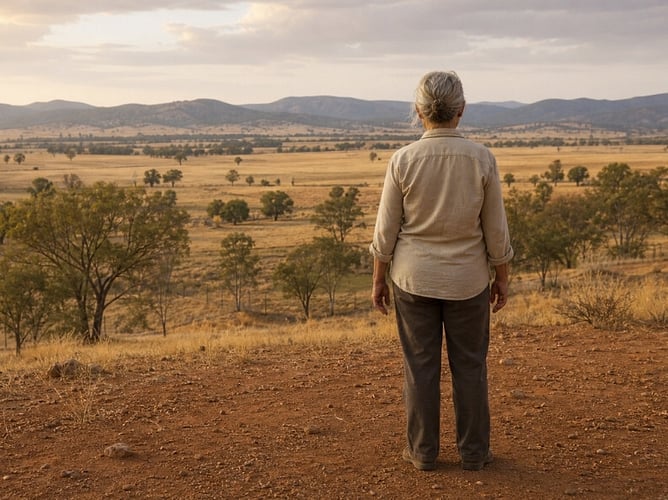
Recently I met Janet, someone who was sharp, capable, and almost impossible to read. She was not overwhelmed. She was not looking for reassurance. She simply worked through her financial position with her adviser and accountant, ticking through what needed attention, giving facts, but never quite giving herself.
It was not until a couple of quiet questions, asked at the right moment, that something shifted. A pause settled over the room. And slowly, in small pieces, Janet began to open up.
There is a particular kind of strength you find in people who have had to hold everything together alone. It rarely announces itself. It sits quietly, steady and composed, and it can easily be mistaken for distance if you are not paying close attention.
Janet had built her life on the land after losing her husband. What followed was not one hardship but a long succession of them: caring for her elderly mother, raising her own children, and later taking in a grandchild after a family loss. Along the way, relationships with some of her children grew distant. Through it all, she kept building, holding the farming property together and growing what she had, season after difficult season.
None of it happened in easy conditions. It was built financially, physically, and emotionally, the hard way.
As the conversation unfolded, I began to understand more of what sat behind the numbers, her losses, her responsibilities, and the standards she quietly held herself to. The financial picture still mattered, of course, but it was no longer where we started. We began instead with what mattered most to her: her sense of security, her family, the relationships she hoped to mend, and her wish that everything she had built would endure without becoming a burden to the people she loved.
This is what I have come to understand after nearly three decades in this work. Financial decisions are rarely just financial. They are shaped by experience, by loss, by responsibility, and by the quiet calculations people make about what they can afford to risk, not only in money, but in life.
Resilience like Janet's does not need to be challenged or reshaped. It needs to be recognised and worked with gently. Behind that steady, guarded exterior is not resistance. It is a strength that has simply learned to stand on its own.
It is only once you understand the human story behind someone's resilience that real guidance can begin, guidance that goes beyond strategy, toward something closer to stewardship.
If you are carrying more than the numbers show, it might help to talk it through with someone who understands both the financial and human side of these decisions.